
“We’re screwed.”
“Don’t do it.”
“Get the f**k out.”
Those are just a few of the quotes from my 2026 State of TV News: What Insiders Really Think survey.
And the quotes above summarize the overall theme — a large sense of pessimism in an industry that’s going through the most challenging and unprecedented period in its history … and at the same time room for “hope.”
I started this project back in the spring. I love numbers and data. I studied NBA stats for fun when I was a kid. Nerd alert!
As an adult, thankfully I’ve transitioned to numbers from Poynter, RTDNA and several others who do periodical research that’s valuable. I thought — why not do something more direct, and directly, from an anchor/reporter currently living through it?
What I got is a gold mine, a wealth of insight that we should all take seriously.
The survey had these simple, straightforward questions:
What TV station or stations do you consider the best in the country right now?
What TV station or stations do you consider the best in your region?
What ownership group do you consider the best to work for right now?
Are there any ownership groups or stations you would caution colleagues about?
What is the single biggest challenge facing TV news professionals right now?
How optimistic are you about the future of local TV news?
In your opinion, which journalism school(s) best prepare students for a career in TV news?
That’s it.
270 TV newsers responded.
And the answers don’t hold back.
If you like this post, please share it. And stick around for the next two weeks when I will release the best stations to currently work for, the ownership groups to avoid, and the best journalism schools in the country.
Every state. Every role.
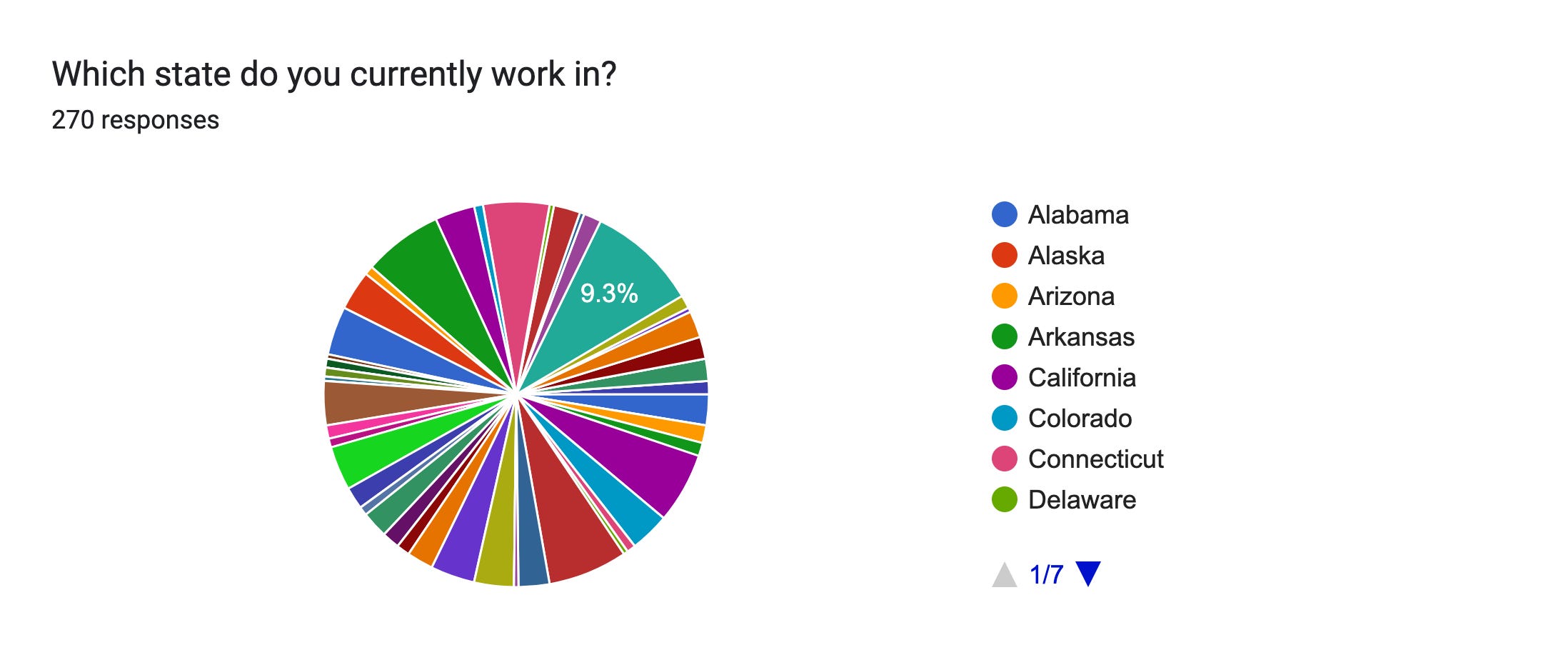
I’m thrilled to share that I’ve received a response from every state (and U.S. territories)— with the most responses coming from Texas, Pennsylvania, Florida, California, and Ohio.
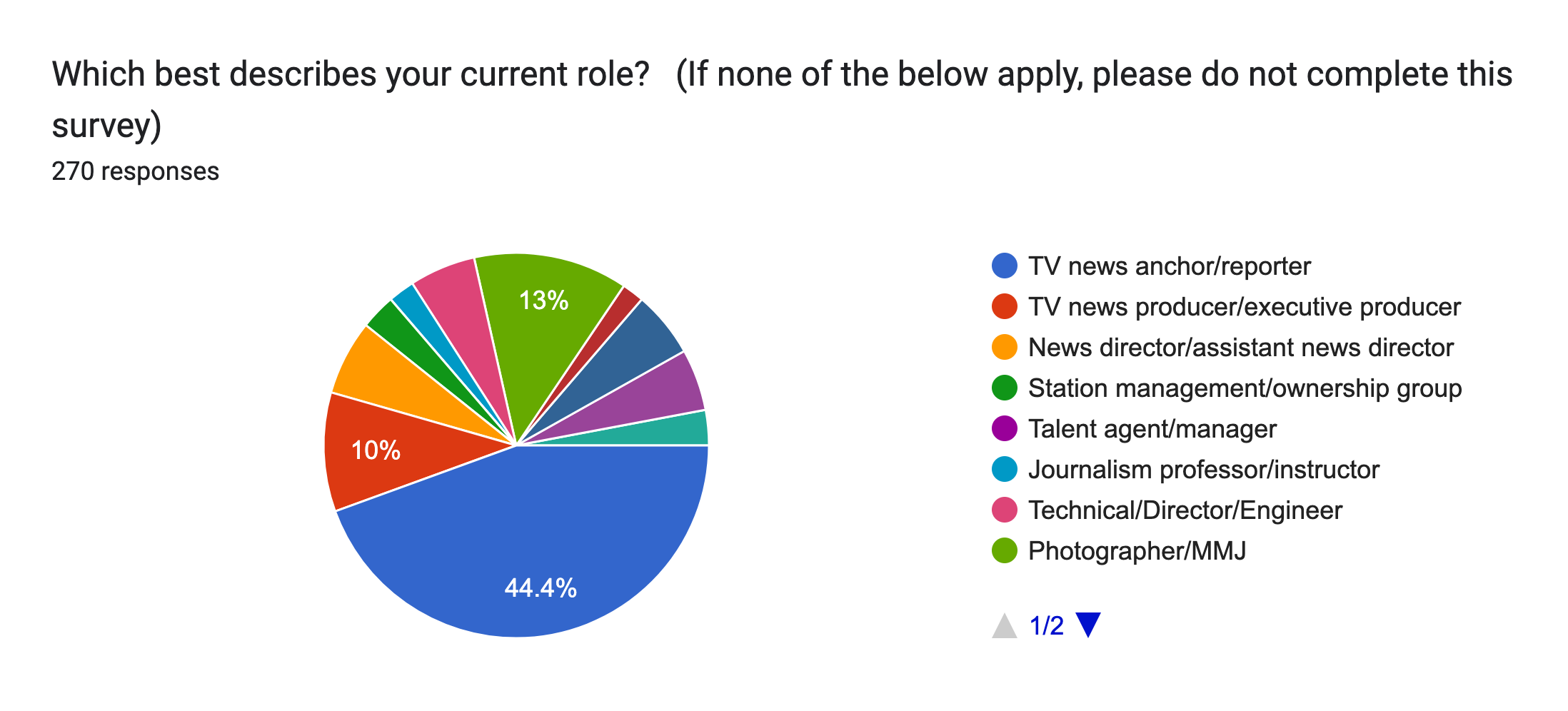
Over half were TV news anchors/reporters, managers or producers.
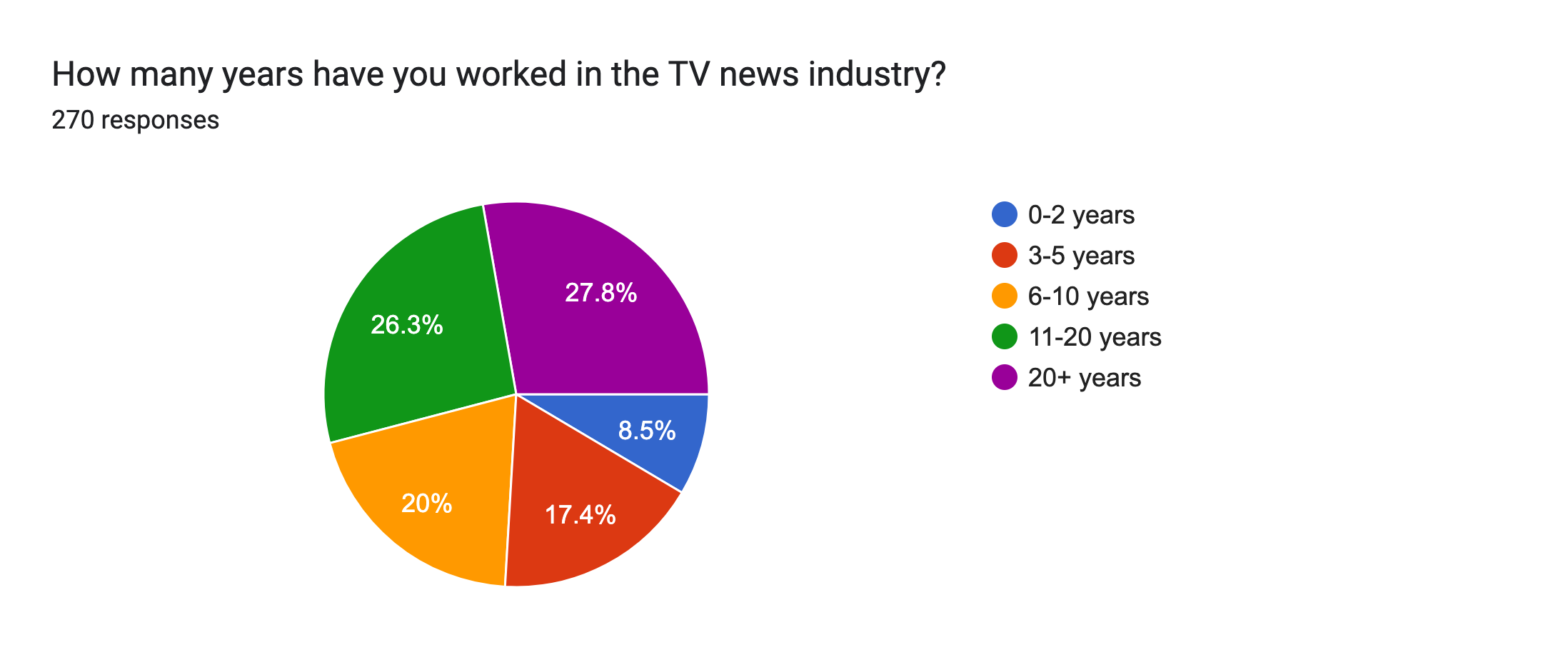
I was able to get responses from real veterans in the business as well.
More than half of respondents have been in the business for more than a decade; 27.8 percent for 20+ years.
The business is not optimistic … at all.
I asked one question straight up: on a scale of 1 to 5, how optimistic are you about the future of local TV news?
Here’s what came back.
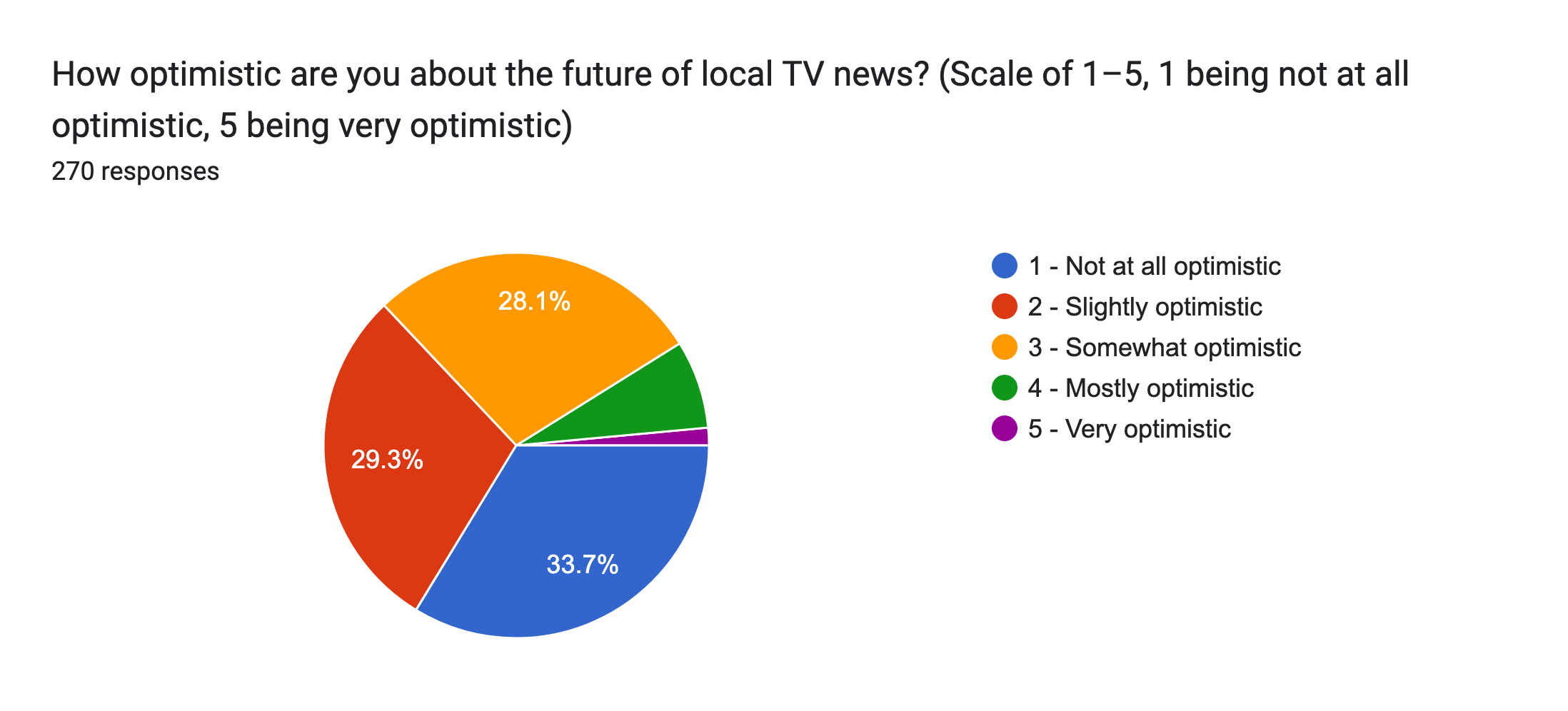
You’re not crazy. All of us are not feeling great about the industry right now. Well, at least one percent of you are.
That’s right. Just 1 percent of surveyors are “very optimistic.” 63 percent of us working TV news professionals landed on “not at all” or “only slightly” optimistic.
TV News’ biggest concerns?
Okay. Now to the nitty-gritty. Here’s what we’re most concerned about right now in TV news. No shockers here.
Over half surveyed say the biggest issues right now are:
Consolidation and layoffs
Low wages and career sustainability
Shrinking budgets and resources
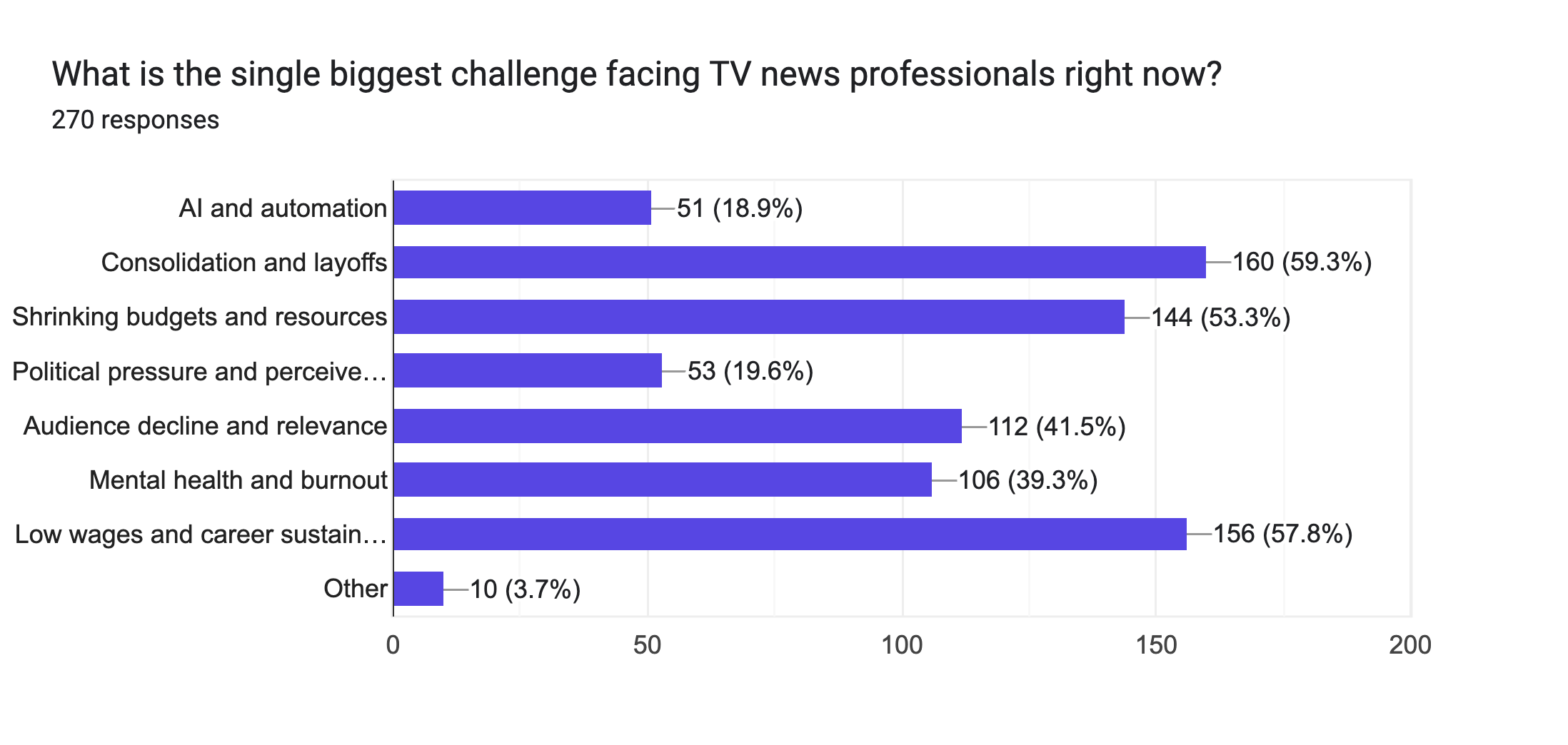
Still a large proportion of us are concerned about audience decline/relevance, along with mental health and burnout.
Roughly only a fifth of TV newsers are worried about AI/automation or political pressure/perceived bias.
Concerns by Job Titles and Regions.
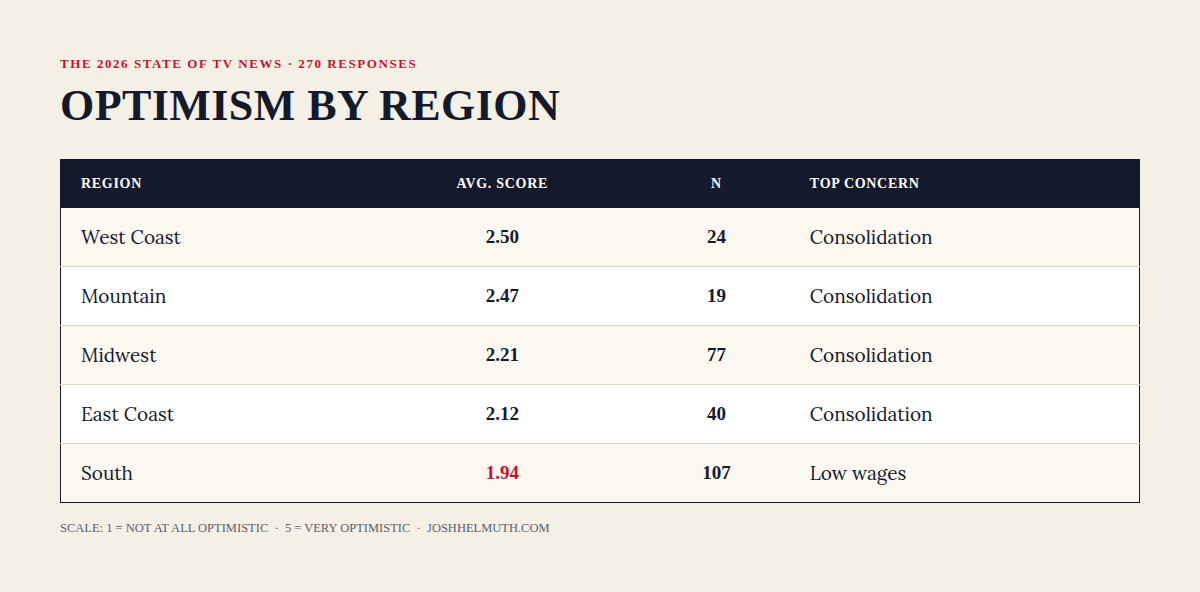
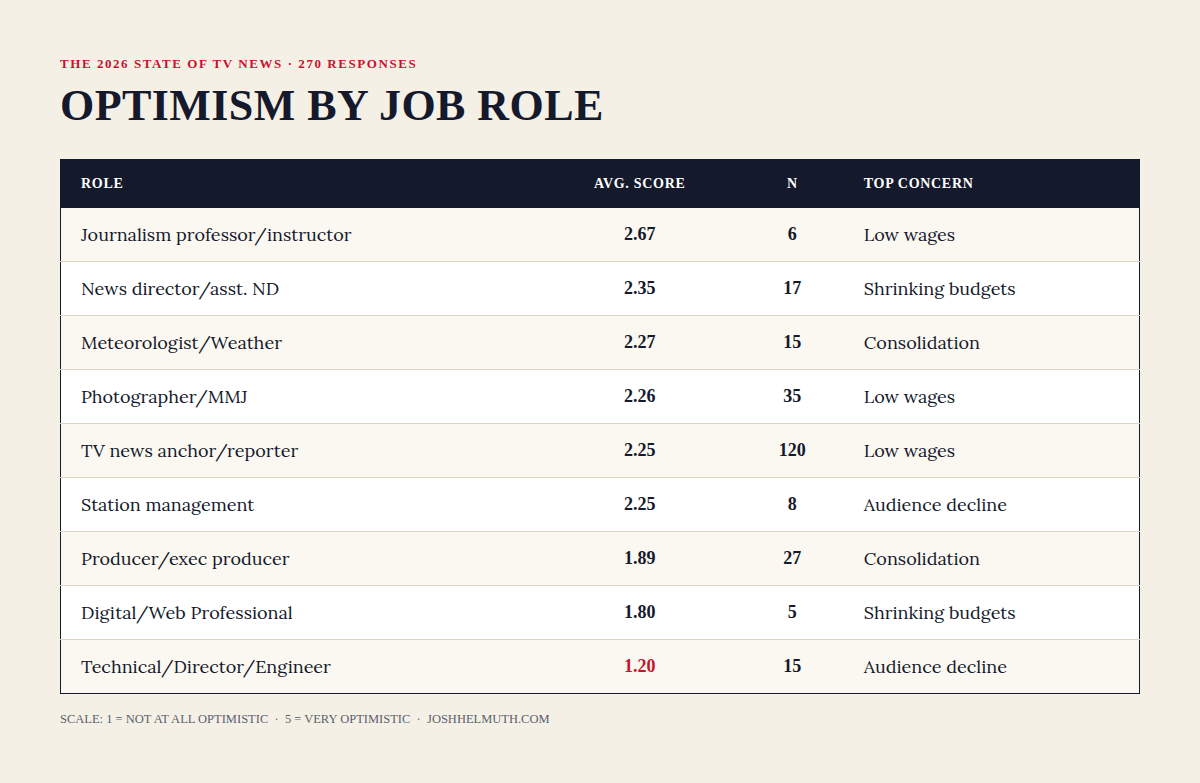
What happens when we break down each concern into specific job titles and regions?
Those of you working in the South are the most pessimistic by far; the South is also the largest group that took part in the survey.
Those who are technical directors and engineers are also the least optimistic, most likely because of the rise in broadcast automation. As you can see, still no one even averages as “somewhat optimistic (3)”.
Here’s where you didn’t hold any punches
I also asked everyone, “Is there anything else you'd like to share anonymously about the state of the industry?”
What I got back was brutal honesty.
1. “Don’t do it” is the single most repeated sentiment in the entire dataset — as in “don’t do” TV news.
That’s not an exaggeration — variations of this appear over and over: “Don’t do it.” “It’s dead.” “Please, do not get into news unless you truly LOVE it.” “If any of my children were considering a TV news career, I would discourage it.” “The only way out is a complete career change.” This is the most consistent theme in the open text — more than any single number in your survey.
2. The financial reality is described in genuinely stark terms
Not just “low pay” as an abstract category — actual numbers people volunteered: $17/hour with no raises in 10 years. Multiple people said they make less than fast-food managers. One wrote that “the cost of working in TV News is debt.”
3. There’s a real, albeit small, counter-current of hope
“Don’t give up on local news.” “The demand for trusted local journalism is growing, not shrinking.” “Local trust is never going away.” “Never give up hope. We are vital in a democratic society.”
4. Mental health is still a real, and very important, concern
One photographer described PTSD-level trauma from covering deaths, and said photojournalists at their station get mocked by producers as “the Basket Cases.”
5. Skeleton crews are still a thing — and people don’t like them
One photographer for an entire station? Working shows with no producer? One reporter covering an entire weekend alone? All of them are very real complaints.
The most eye-catching comments
This comment from a TV news veteran in Minnesota jumped out:
“Too many stations are being run by people who never had the actual experience in the field, so the people making decisions are typically those who have no idea what the talent is going through.”
I actually wrote this Substack on that topic just recently.
This “mostly optimistic” anchor/reporter in Missouri goes against the grain:
“Consolidation doesn’t have to be a bad thing. I believe whoever survives the next 5 years, whichever companies can crack the streaming/social media problem, will thrive. I think the problem is as much about apathy and interest as much as it’s about delivery. Local news now competes with Netflix, Amazon, etc. for interest. Local news ownership will either have to grow to a size that it can compete effectively with those companies, or we will be absorbed by them.”
A news director/assistant news director in Texas:
“I’m not convinced the audience is shrinking solely because of relevance. I think the audience is getting news in space local TV has waited far too long to explore. Our content is relevant. How we deliver it is not.”
A 20-year TV news vet in California:
“Learning the digital pivot has to be a priority. Good quality podcast style new broadcast and an app that can support it. Linear TV is so outdated and no one is watching it. We must be meeting viewers where they are. They are streaming and on cell phones. A good story still carries a lot of weight. Enterprise and people stories will still be watched today.”
A TV anchor/reporter in Texas:
“Personal experience: The audience is there for streaming-based eyeballs…Example: Steaming [sic] OBS live to Facebook or YouTube….But management seems concerned about the ability monetize it. “Facebook live views/likes don’t make us any money” is the common answer.”
This management should read my most recent post on monetization. Facebook pays. It pays well. And I believe it can easily be done ethically.
From a producer in Arizona in their first job:
“TV news needs to be where the people are and stop being owned by political lobbyists.”
Anchor/reporter from Illinois:
“Companies get what they pay for and going younger and cheaper has a price. It waters down the product. Same with consolidation. Viewers suffer.”
A TV anchor from Kentucky:
“As an evening anchor in a top 50, I’m leaving the business after 14 years. Here are several reasons why. The FCC is letting a few bad companies get close to monopolizing the industry to the detriment of the people, product and audience. Companies are trying to add more hours of coverage while slashing staffing. They’re more interested in output than impact. People are doing two to three jobs for the price of one leading to burnout. When I started in the industry, there was an end goal. The low pay, bad hours and sacrifice could help you land a great paying main anchor role one day. However, the industry no longer offers incentives for people with that great experience so they leave the business. The challenge is, I would not have gotten where I am today without veteran anchors mentoring me. If all the veterans leave, who is left leading the next generation. It’s a terrible cycle.”
From a long-time news director/assistant news director in Kansas:
“The next few years will be unlike anything our industry has experienced. I hope/trust, things will settle down within 2 years after the big dogs complete the mergers and acquisitions.”
A Virginia news director/assistant news director on AI:
“AI is not the threat… it’s a combination of relevance and corporate decisions to limit newsroom spending, and the delayed attention to digital platforms to meet audiences where they are that have threatened journalism.”
A South Carolina station manager/ownership group:
“The demand for trusted local journalism is growing, not shrinking. Yes, the audience landscape is fragmented and there is more competition for attention than ever. But, trusted local brands can capitalize on countering the bullsh*t AI and social media is spewing into the algorithms. Don’t give up. The business model is adapting quickly. Opportunity abounds.”
A station manager/ownership group in Missouri:
“Consolidation is a major threat, we’ve already seen layoffs. And while I support wholly increasing our reach on social media, I fear the algorithms will make it impossible. Big tech hasn’t been favorable to quality journalism. That’s a huge fear that makes me consider leaving.”
An anchor/reporter in Wisconsin:
“I feel TV news will always be a necessity and will continue to survive despite the current state of the industry. It just needs to evolve. Just like TV ‘killed’ the Radio Star, social media is ‘killing’ traditional TV. We must adapt and pivot.”
A digital/web professional in Iowa:
“If TEGNA/Nexstar goes through, I fear for the state of honest, true local journalism that works for the community.”
A news director/assistant news director in Wisconsin:
“It’s tough right now. In most places, audience fragmentation has led to fewer resources and consolidation/layoffs (which has picked up recently, similar to the 2008-2009 nationwide cuts, except now there’s not much left to cut)… which leads to more pressure on staff with less pay… which leads to constant turnover… all of which leads to even fewer viewers. It’s a death spiral.”
A digital/web professional in Connecticut:
“The industry is not as valuable as it once was. Journalism can be done anywhere. You dont have to rely on a news outlet or publication. Start your own thing, build your own brand. The audience will come to you.”
An anchor/reporter in Texas with 20+ years’ experience:
"We must be given the corporate mandate, and then freedom, to bring our newscasts into the 21st century. We can’t keep telling the same stories in the same fashion we’ve told them for the last 60 years and expect anyone to care. We should reflect and connect to our neighbors on ALL platforms, not just talk about their worst days and anything that happens to show up on a press release. Focus on continuing education in our newsrooms for all facets of life in the business. Make the reporters the “stars’ not day-turning robots.”
An anchor/reporter in Indiana:
“Things are scary, but news will always be needed. Station ownership groups need to understand that better pay is the best recruitment strategy.”
A long-time meteorologist in Oregon:
“We need to move more digital. Think influencer almost. No one watches anything live anymore. Podcast, documentaries, social reels, web stories. That’s where the industry is going. Not traditional newscasts. I feel like I could do all of that on my own and make way more money then distributing it to the sales department, producers, directors, even the cleaning crew. It’s sad, but I feel like I could do a better job than some of the talent that’s currently in some positions. The talent, the work ethic just isn’t what it used to be… and I’m only in my 30s.”
You can view the partial 2026 State of TV News results here.
There’s a lot to unpack. But, to me, the trend isn’t surprising — TV news is in a really tough spot. It needs to radically adjust, or it’s going to end up in the same place as the newspaper industry.
And we’re not done
Stay tuned. I have two more upcoming newsletters where I will release the most up-to-date TV news data regarding: the best TV stations to work for, the best/worst ownership groups, and the best J-schools in the country. The latter will include great insight from professors and advice from vets to those in school, or those new to TV news in their first or second jobs.
If you’re new here, this newsletter is just the tip of the iceberg.
I have a brand new Newsroom Survival Guide that lays out the six things I wish someone had handed me on day one in TV news.
I’m also launching a 6-week private mentorship program. Applications are now open. You can apply here.
I’ll see you next week.
Until then, let’s lift each other up. Let’s be atypical.
TV anchors seem more interested in creating "silly" viral videos than doing their actual job and most TV stations for some unknown reason actually encourage this
I LOVE that the most obvious answer “We’re very shitty at our job” ever appeared on the horizon.